CTAF and part-time towers, for Part 107
Updated 2026-10-16. Independent guide, not affiliated with the FAA.
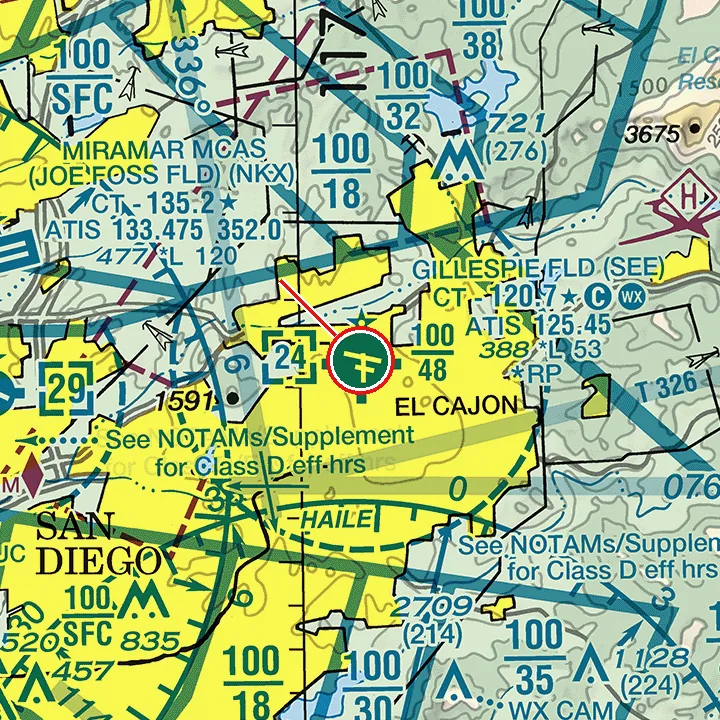
The Common Traffic Advisory Frequency (CTAF) is where manned pilots announce positions at airports without an operating tower. Remote pilots are not required to transmit, but should monitor it for awareness (AC 107-2).
Find it on the chart
- Non-towered airport: the frequency followed by a C in a solid magenta circle. Often it is the UNICOM too.
- Part-time tower:
CT - 119.0 * C. The star means the tower is part-time; the C means 119.0 becomes the CTAF when the tower closes.
The FAA's own sample
The FAA's September 2026 advisory asks which frequency to use as the CTAF at Grand Canyon National Park (GCN) when the tower is not operating. The answer is 119.0, the tower frequency. The distractors are other frequencies printed nearby: ATIS and UNICOM. Our chart bank has 40+ questions built the same way from current FAA frequency data.
Try 10 chart questions free
Excerpts from current FAA sectionals, worked explanations, score by topic. About 5 minutes, no signup.
Take the free 10-question chart diagnosticFAQ
- Does a drone pilot have to talk on the CTAF?
- No. Part 107 does not require a radio, but monitoring the CTAF helps you avoid manned traffic.
Full access
$24 one-time. No subscription.
The FAA test costs about $175 at the testing center, and a fail means a 14-day wait to retest.
- 178 chart questions on excerpts from current FAA sectionals, each with a worked explanation
- 304 general Part 107 questions mapped to Remote Pilot ACS codes
- Timed 60-question mock exams in the FAA test format (2 hours, 70% to pass)
- Read the current chart mode: unseen chart excerpts, timed
- Spaced repetition review that remembers what you miss
- No account, no subscription, works on your phone
- No account
- Works on your phone
- Instant access
SectionalDrill is independent and not affiliated with the FAA, the U.S. government or any government agency.